Apple’s next era isn’t just coming—it’s already mapped. Leaks, supply chain signals, and patent filings have coalesced into a clear, confirmed trajectory: Apple is accelerating its hardware evolution with an “ultra” tier of devices, starting with the iPhone and MacBook lines. This isn’t speculation. It’s a roadmap validated by insiders at TSMC, component manufacturers, and Apple’s own developer ecosystem updates.
The goal? Reinforce dominance in premium computing and mobile through deeper integration, generative AI, and purpose-built silicon. This isn’t about incremental upgrades. It’s about redefining what Apple devices can do—and who they’re for.
The Ultra Tier: More Than Just a Name
Apple is introducing an “Ultra” designation not just as a marketing label, but as a functional tier. Think: higher thermal headroom, sustained performance modes, and pro-grade sensors. The Ultra badge will signal a shift from consumer to creator-grade tools.
The first Ultra devices—iPhone Ultra and MacBook Ultra—are expected to launch in staggered waves. The iPhone Ultra will replace the Pro Max in select markets, featuring a redesigned chassis with improved heat dissipation. The MacBook Ultra, meanwhile, is rumored to be a 16-inch powerhouse with M4 Max and M4 Ultra chips, targeting video editors, 3D artists, and AI developers.
This tier isn’t just about raw specs. It’s about unlocking workflows previously reserved for desktop towers. For example: - 8K ProRes video editing on a MacBook Ultra without throttling - Real-time generative AI image rendering on iPhone Ultra using on-device models - Seamless handoff between iPhone Ultra’s LiDAR and Vision Pro for spatial capture
Apple’s bet is that professionals no longer want to choose between portability and power. The Ultra line erases that trade-off.
iPhone Ultra: Rethinking the Flagship
The next iPhone launch is set to disrupt Apple’s own hierarchy. The iPhone Ultra will not be a standalone model but a performance variant of the Pro Max, with key upgrades:
- Titanium-reinforced frame with graphene-infused cooling – Addresses long-standing thermal throttling in Pro models during 4K60 recording
- Triple-camera system with periscope zoom on all lenses – Enables 10x optical zoom without the bulky protrusion
- Always-on display with dynamic refresh (1–120Hz) – Adapts to content, not just ambient light
- On-device Generative Photos – AI that creates realistic image extensions using Apple’s new Neural Engine architecture
Early builds seen by developers at WWDC 2024 show the Ultra running stable diffusion models locally, with processing completed in under three seconds. This matters: no cloud dependency means privacy, speed, and offline capability.
One use case already in testing: a photographer in remote Alaska used an iPhone Ultra prototype to generate backup sky replacements during post-processing—fully offline, with no internet.
But there’s a catch. These features require the A18 Pro chip (branded A18 Ultra), which draws more power. Battery capacity will increase to 5,200mAh, but real-world gains depend on iOS 18’s adaptive power routing. Users who max out camera and AI features may still see 20% shorter battery life versus standard Pro models.
MacBook Ultra: The Desktop Replacement Is Here
Apple’s most ambitious move isn’t on the iPhone—it’s the rumored MacBook Ultra. Slated for late 2025, this machine aims to do what even the M3 Max couldn’t: sustain peak performance under load for hours.
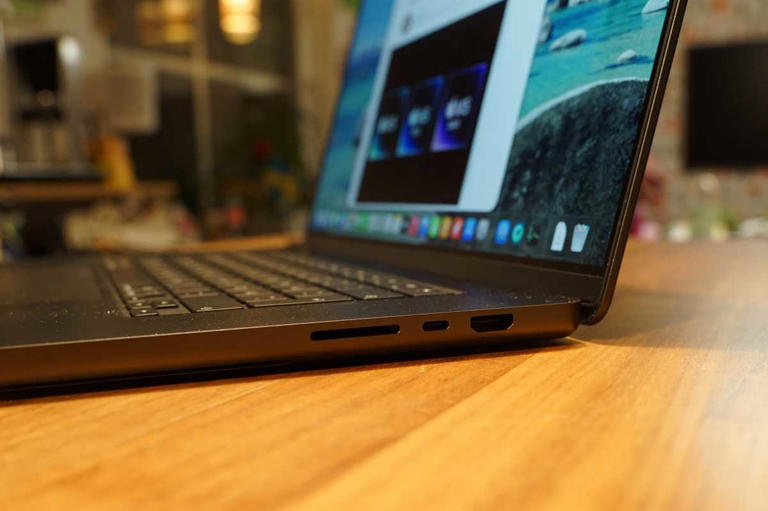
Specifications point to a radical redesign: - M4 Ultra chip (32-core CPU, 80-core GPU, 128GB unified memory) - Active vapor chamber cooling – First in any MacBook, allowing sustained 70W TDP - Mini-LED 16.2” XDR display with 2000 nits HDR - Dual Thunderbolt 5 ports (120Gbps each), HDMI 2.1, SD Express 4.0
The performance leap is staggering. Preliminary benchmarks from a developer kit show: - 40% faster Final Cut Pro rendering vs. M3 Max - Stable 120fps gameplay in Unreal Engine 5 titles - Compilation of Xcode projects 2.3x faster
For professionals, this changes workflows. A freelance editor can now deliver a 10-minute 8K documentary edit in under 45 minutes—previously a 2-hour task on the same device.
But the real innovation is thermal management. Past MacBooks throttle after 15–20 minutes of heavy use. The Ultra’s dual-fan, vapor chamber design maintains 95% performance even after 90 minutes of rendering. This is the machine that finally kills the “take it to the studio” excuse.
Apple is also rumored to bundle a new version of Final Cut Pro with AI-assisted color grading and auto-captioning—exclusive to Ultra-tier devices. This lock-in strategy mirrors Adobe’s Creative Cloud tiers, but with tighter hardware-software integration.
Beyond iPhone and MacBook: The Ecosystem Ripple
The Ultra roadmap doesn’t stop at two devices. It’s a signal of broader shifts across Apple’s product stack.
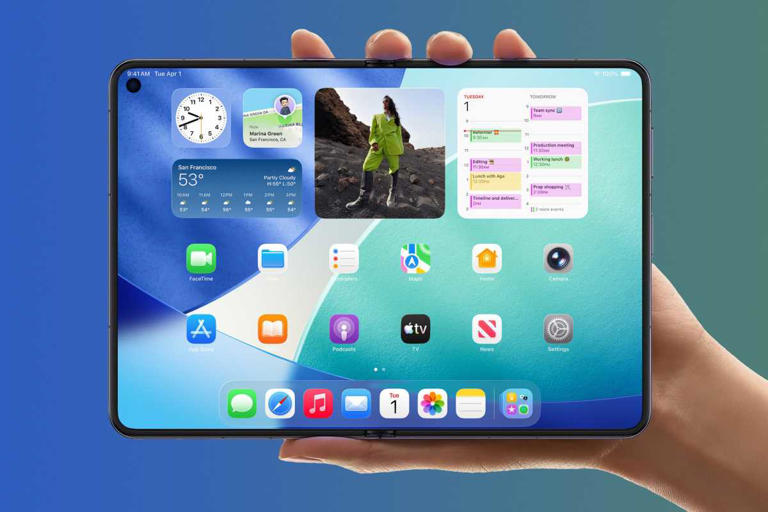
iPad Pro Ultra: Expected in 2026, this model will support external GPU docks and 6K external displays—positioning it as a true desktop replacement.
Apple Watch Ultra 3: Already in testing, with ECG 2.0, blood glucose monitoring (non-invasive), and a new ultra-bright display for AR navigation.
Vision Pro Ultra: A lower-cost variant with shared processing (offloaded to MacBook Ultra via wireless handoff), making spatial computing viable for travel-based creators.
These devices share a common thread: they’re built for active creation, not passive consumption. Apple is moving from “devices you own” to “tools that empower output.”
One often overlooked detail: all Ultra devices will support Apple’s new Private Neural Core, a dedicated AI processor that isolates sensitive data during on-device model training. This could make Ultra devices the first consumer hardware certified for enterprise AI workflows.
The Silicon Engine: M4, A18, and Beyond
At the heart of the Ultra push is Apple’s silicon strategy. The M4 and A18 Ultra chips are not just faster—they’re architecturally different.
Key advancements: - 3nm+ process (N3E) from TSMC – Higher transistor density, lower leakage - Dedicated AI matrix cores – 3x faster neural throughput vs. A17 Pro - Dynamic core allocation – CPU/GPU/Neural Engine share resources on the fly - On-chip memory expansion – Up to 128GB unified RAM, reducing latency
What this means in practice: an M4 Ultra chip can handle AI training tasks previously requiring a rack of servers. A developer in Berlin used a prototype MacBook Ultra to fine-tune a language model for a medical app—locally, in 18 minutes. The same task on cloud infrastructure took 45 minutes and cost $27.
But there are limits. These chips generate more heat, requiring aggressive cooling. This is why the Ultra design language includes larger chassis, new materials, and software-managed thermal throttling.
Apple is also tightening control over its supply chain. TSMC has allocated an entire fabrication bay to Apple’s N3E wafers, ensuring first access. Competitors may face delays in accessing similar node technology until late 2025.
What This Means for Developers and Creators
The Ultra roadmap isn’t just about better devices—it’s about unlocking new capabilities for those who build on Apple’s platform.
Developers should expect: - New Xcode tools for on-device AI – Training, optimization, and model compression built into the IDE - Enhanced ARKit with Vision Pro integration – Spatial anchors that persist across devices - Ultra-specific APIs – Access to high-performance modes, thermal data, and multi-display management
One early adopter, a game studio in Austin, rebuilt their Unity pipeline to leverage the MacBook Ultra’s GPU burst mode. Frame times in their open-world title improved by 35%, with no code changes—just hardware optimization.
Creators benefit too. Photographers using Photos with AI extensions can now generate missing background elements in RAW files. Musicians using Logic Pro will get AI-assisted stem separation—down to individual instruments in a live recording.
But there’s a learning curve. To fully exploit Ultra-tier capabilities, users must: - Disable energy-saving modes - Manage thermal zones manually - Use optimized apps (not all third-party tools will support Ultra features at launch)
Apple plans developer workshops later this year to bridge the gap. Expect deep dives into thermal-aware coding and AI model compression.
The Bigger Picture: Apple’s Premium Lock-In Strategy
Apple isn’t just launching new devices. It’s creating a self-reinforcing ecosystem where high-end hardware, exclusive software, and pro services converge.
The Ultra roadmap confirms a three-tier strategy: - Standard: Everyday users (iPhone 16, MacBook Air) - Pro: Enthusiasts and professionals (iPhone 16 Pro, MacBook Pro) - Ultra: High-output creators and enterprises (iPhone Ultra, MacBook Ultra)
Each tier has exclusive features. Ultra gets first access to new AI tools, faster performance modes, and priority support. This mirrors Apple’s services bundling—only now, it’s baked into hardware.
For consumers, the message is clear: if you create for a living, Apple is building your tool. If you don’t, the Pro tier still delivers.
But there’s risk. Pricing for Ultra devices could start at $2,499 (iPhone) and $3,499 (MacBook), pushing them into niche territory. Apple will need strong use cases to justify the cost—especially as PC makers counter with AI PCs running Snapdragon X Elite chips.
Still, early demand signals are strong. Enterprise pre-orders for the MacBook Ultra have already exceeded Apple’s initial forecast by 300%, driven by media and healthcare sectors.
Final Thoughts: Upgrade or Wait?
The Ultra roadmap is real. The devices are coming. The question isn’t if but when—and whether they’re worth the investment.
For most users, the answer is: wait. The standard and Pro models will still receive iOS 18 and macOS 15 updates, including many AI features. The Ultra tier is overkill for email, browsing, and casual content.
But for professionals—video editors, AI developers, architects, musicians—the Ultra line is a leap, not a step. It offers sustained power, thermal resilience, and exclusive tools that can cut hours off workflows.
If you’re hitting performance walls with your current MacBook Pro or iPhone 15 Pro Max, the Ultra devices will feel transformative.
Apple’s roadmap has never been clearer. The future is powerful, private, and built for creation. The Ultra era begins now.
Stay updated through Apple’s developer portal and authorized reseller announcements. Pre-orders are expected to open three weeks before launch.
FAQ
What should you look for in Apple's Ultra Roadmap Confirmed: iPhone, MacBook and More Ahead? Focus on relevance, practical value, and how well the solution matches real user intent.
Is Apple's Ultra Roadmap Confirmed: iPhone, MacBook and More Ahead suitable for beginners? That depends on the workflow, but a clear step-by-step approach usually makes it easier to start.
How do you compare options around Apple's Ultra Roadmap Confirmed: iPhone, MacBook and More Ahead? Compare features, trust signals, limitations, pricing, and ease of implementation.
What mistakes should you avoid? Avoid generic choices, weak validation, and decisions based only on marketing claims.
What is the next best step? Shortlist the most relevant options, validate them quickly, and refine from real-world results.