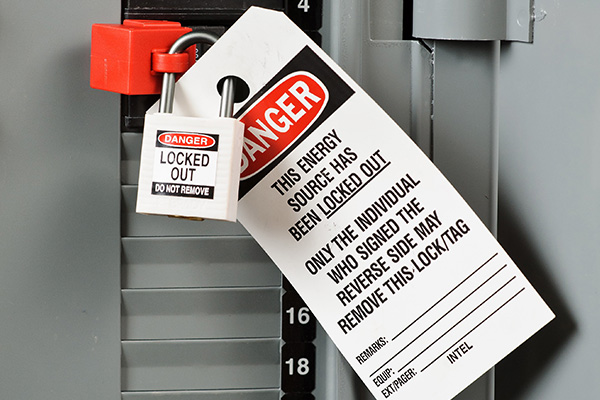
Most lockout tagout programs fail not because of poor procedures—but because the signage doesn’t communicate urgency or clarity at the moment it matters. Workers in high-risk environments don’t have time to interpret vague warnings. They need signage that cuts through noise, defines responsibility, and prevents accidental startup of machinery during maintenance.
OSHA’s 29 CFR 1910.147 outlines energy control procedures, but it's the visual layer—signage and tags—that turns compliance into real-world protection. Poorly designed or missing lockout tagout signage is one of the top oversights in safety audits, often leading to near-misses or worse.
This is not about checking a box. It’s about creating a visual safety culture where every tag and label reduces risk.
Why Lockout Tagout Signage Isn’t Just Paper on Metal
Lockout tagout (LOTO) signage does more than meet regulatory requirements—it influences behavior. A tag that reads “Do Not Operate” with no context is easily ignored. One that says “Maintenance in Progress – Electrical Hazard – Authorized Personnel Only” carries weight.
Signage serves three operational roles:
- Warning – Alerts personnel that equipment is unsafe to operate.
- Identification – Specifies which energy source is isolated.
- Accountability – Includes the name, department, and time of the person applying the lock.
In practice, this means signage bridges the gap between procedure and perception. A study by the National Institute for Occupational Safety and Health (NIOSH) found that 20% of LOTO-related incidents occurred due to unclear or missing signage—even when locks were applied.
Real-world example: At a Midwest manufacturing plant, a technician was servicing a conveyor system. The lockout was applied, but the tag was handwritten on masking tape. Another worker, unaware of the maintenance, removed the lock, assuming it was forgotten. The result: severe hand injury. A standardized, tamper-resistant tag with bold headers and machine ID could have prevented it.
OSHA Requirements for LOTO Signage: What You Must Include
OSHA doesn’t prescribe exact designs, but it mandates functional standards. Your signage must be:
- Durable – Resistant to environment (moisture, chemicals, abrasion).
- Legible – Clear font, readable at 5 feet.
- Unique – Easily distinguishable from other signs.
- Specific – Must identify the equipment and energy type isolated.
While locks physically prevent operation, tags are the communication layer. According to OSHA, a tag must include:
- Name of the authorized employee
- Date and time of lockout
- Reason for isolation
- Equipment identification
- Warning statement (e.g., “Do Not Start,” “Do Not Open”)
Common mistake: Using generic tags across all machines. A hydraulic press demands different warnings than a boiler system. Tailor tags by hazard type—electrical, mechanical, pneumatic, thermal.
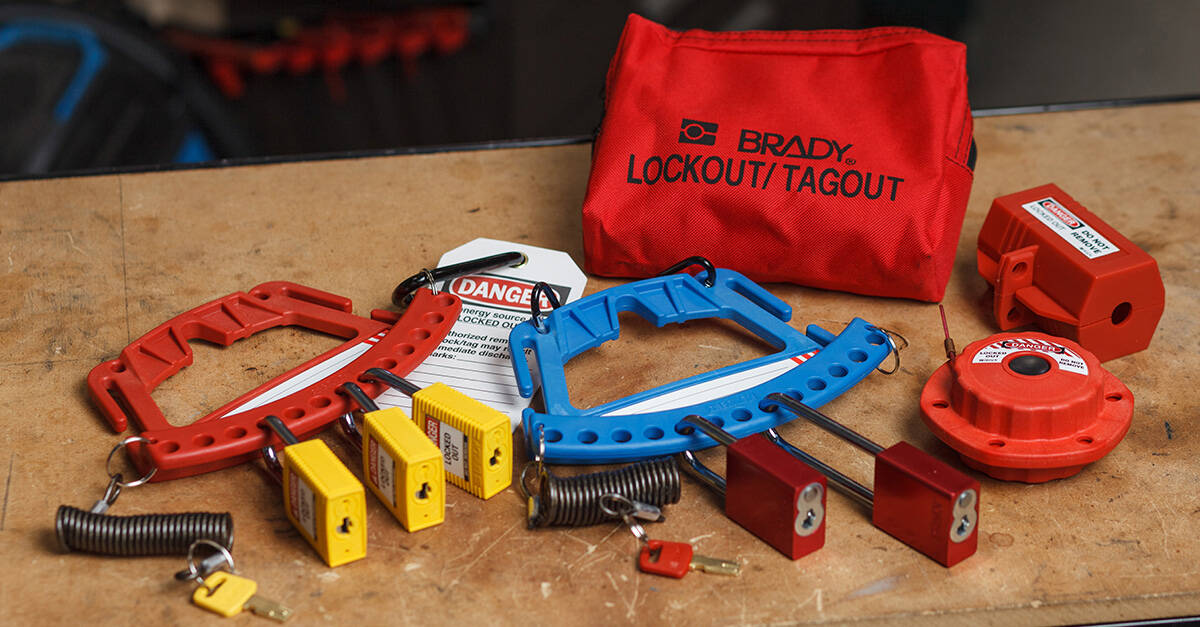
Pro tip: Use color coding. OSHA doesn’t require it, but ANSI Z535 standards recommend: - Red = danger (immediate hazard) - Yellow = caution (potential hazard) - Blue = mandatory action (e.g., “Lockout Required”) - Green = safety information
This makes compliance instinctive, even under stress.
Types of Lockout Tagout Signage and Where to Use Them
Not all signage is created equal. The right type depends on your workflow, equipment, and risk profile.
1. Standard LOTO Tags Pre-printed or customizable tags used during active maintenance. Ideal for single-point isolation (e.g., a motor control panel).
Best for: Routine maintenance, short-duration work Material: Polyester or laminated paper with tear-resistant string Limitation: Not tamper-proof; can be removed easily
2. Master Lockout Boards Wall-mounted stations with multiple lockout points and corresponding tags. Used in complex systems where multiple energy sources feed one machine.
Best for: Assembly lines, processing plants Example: A packaging line with electrical, pneumatic, and hydraulic inputs. Each energy source has a designated lock spot on the board with a corresponding tag.
3. Warning Signs (Fixed) Permanent signs installed near hazardous equipment. These remind workers that lockout is required before service.
Best for: High-traffic areas, shared equipment Example: A sign near a shredder that reads: “LOCKOUT REQUIRED BEFORE MAINTENANCE – ENERGY SOURCES: ELECTRICAL, MECHANICAL”
4. Group Lockout Tags Used when multiple workers service the same machine. Each applies their personal lock, but the tag lists all names and roles.
Best for: Team maintenance, shift handover Critical detail: The tag must stay until all locks are removed—not just the lead technician’s.
5. Out-of-Service Tags Indicates equipment is broken or under repair but may not yet be locked out. These are transitional—never a substitute for LOTO.
Mistake alert: Using “Out of Service” tags instead of LOTO during active repair. This creates a false sense of security.
A good tag stops action. A great one prevents accidents before they start. Use these five features in every design:
- Bold Header
- Use phrases like “DANGER – DO NOT OPERATE” in all caps, large font (minimum 36 pt). Avoid passive language.
- Machine ID Field
- Include a blank space or QR code linked to the equipment’s maintenance log. This ties the tag to a specific asset.
- Tamper-Evident Construction
- Choose tags with void patterns (“VOID” appears if peeled) or destructible materials that rip if removed.
- Weather-Resistant Material
- For outdoor or washdown environments, use polyester or vinyl tags that resist fading and moisture.
- Multilingual Support
- In diverse workplaces, include warnings in Spanish or other common languages. Not required by OSHA but critical for comprehension.
Workflow tip: Integrate tag issuance into your work permit system. No tag = no work authorized.
Common Signage Mistakes That Undermine LOTO Programs
Even experienced safety teams make these errors—often unknowingly.
Mistake #1: Using Pencils or Non-Permanent Ink Handwritten tags with pencil fade or smudge. Use waterproof markers or pre-printed fields.
Mistake #2: Skipping the Reason for Lockout A tag that only says “Under Maintenance” doesn’t tell others what’s being done. Was it a belt replacement? Electrical inspection? Specificity prevents premature removal.
Mistake #3: One-Size-Fits-All Tags A single tag type for all machines ignores hazard diversity. A forklift battery disconnect needs different warnings than a chemical valve isolation.
Mistake #4: Poor Visibility Placing tags behind panels or in shadowed areas. Tags must be visible from normal operation points.
Mistake #5: Allowing “Temporary” Tags “Will be back in 5 minutes” tags left unattended increase risk. If it’s not locked, it shouldn’t be tagged.
Reality check: Audits show 30% of LOTO violations are signage-related. Fix the sign, and you fix a major gap.
Top 5 Lockout Tagout Signage Systems for Industrial Use
Choosing the right system depends on scale, industry, and compliance needs. Here are five proven options:
| Product | Best For | Key Features | Limitations |
|---|---|---|---|
| Brady BMP61 DuraSuite | Heavy industry, oil & gas | Weatherproof polyester tags, barcode integration, OSHA-compliant templates | Higher cost per unit |
| Master Lock 1490MLTA | Manufacturing, maintenance teams | Durable vinyl tags, tear-resistant, multilingual options | Limited customization |
| Seton Safety LOTO Kits | Facilities with diverse equipment | Full kits with tags, locks, and signage; ANSI-compliant designs | Bulk ordering required for best pricing |
| Grace Industries Pro-LOTO | High-risk environments | Photoluminescent tags, glow-in-the-dark warnings, tamper-evident | Niche availability |
| Justrite 22400 | Warehouses, utilities | Magnetic lockout boards with integrated signage | Less portable |
Insight: The best systems include digital tracking. Some advanced kits link tags to mobile apps, allowing supervisors to verify lockout status remotely.
Integrating Signage Into Your LOTO Workflow
Signage isn’t a final step—it’s part of a living process.
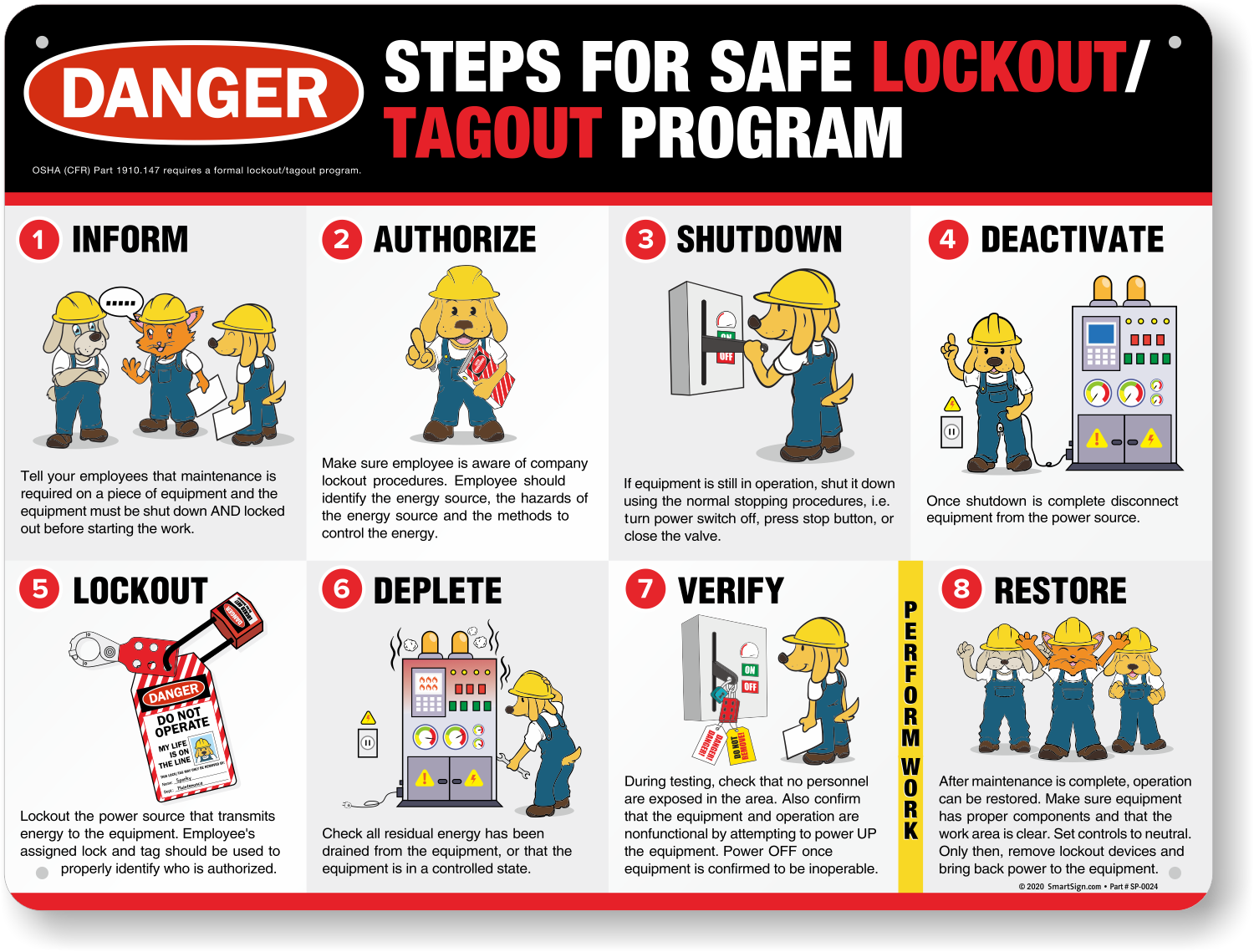
Step 1: Before shutdown, verify the equipment and energy sources. Use fixed signage to confirm lockout is required.
Step 2: Apply locks and attach tags with complete information. Use checklists to ensure nothing’s missed.
Step 3: Conduct a verification test—ensure zero energy release after isolation.
Step 4: During work, keep tags visible and undisturbed.
Step 5: At release, remove only when work is complete, tools are clear, and personnel are safe. Update logs.
Pro workflow: Use colored tags by shift. Red for day, blue for night. This prevents confusion during handovers.
The Bottom Line: Signage That Saves Lives
Lockout tagout signage isn’t paperwork—it’s a frontline defense. When designed right, it communicates urgency, assigns responsibility, and withstands real-world conditions.
Don’t settle for generic tags that blend into the background. Invest in clear, durable, and specific signage that aligns with your equipment, your team, and your safety culture.
Audit your current LOTO tags. Are they readable? Are they tamper-resistant? Do they tell the full story?
If not, redesign them now. Because the next tag might not just stop a machine—it might stop a tragedy.
Frequently Asked Questions
What makes lockout tagout signage OSHA-compliant? It must be durable, legible, specific to the equipment, and include the authorized employee’s name, reason for lockout, and date/time.
Can I use handwritten tags for LOTO? Yes, but only if written in permanent ink. Pencil or erasable marks are unacceptable due to legibility and tampering risks.
Do lockout tags need to be red? OSHA doesn’t require red, but it’s the standard for danger signs. Use red for maximum visual impact and alignment with ANSI guidelines.
Are digital tags acceptable for LOTO? Not as standalone. Physical tags are required. However, digital logs or QR codes on tags can enhance tracking and verification.
How long can a lockout tag remain in place? Until the job is complete and the authorized employee removes it. Tags left after shift changes must be transferred formally during handover.
Should every lock have a tag? Yes. OSHA requires a tag on every lock unless the employee is continuously monitoring the lockout (rare in practice).
Can out-of-service tags replace LOTO tags? No. “Out of Service” tags are not a substitute for formal lockout procedures and do not provide the same legal or safety protection.
FAQ
What should you look for in Lockout Tagout Signage That Actually Stops Accidents? Focus on relevance, practical value, and how well the solution matches real user intent.
Is Lockout Tagout Signage That Actually Stops Accidents suitable for beginners? That depends on the workflow, but a clear step-by-step approach usually makes it easier to start.
How do you compare options around Lockout Tagout Signage That Actually Stops Accidents? Compare features, trust signals, limitations, pricing, and ease of implementation.
What mistakes should you avoid? Avoid generic choices, weak validation, and decisions based only on marketing claims.
What is the next best step? Shortlist the most relevant options, validate them quickly, and refine from real-world results.